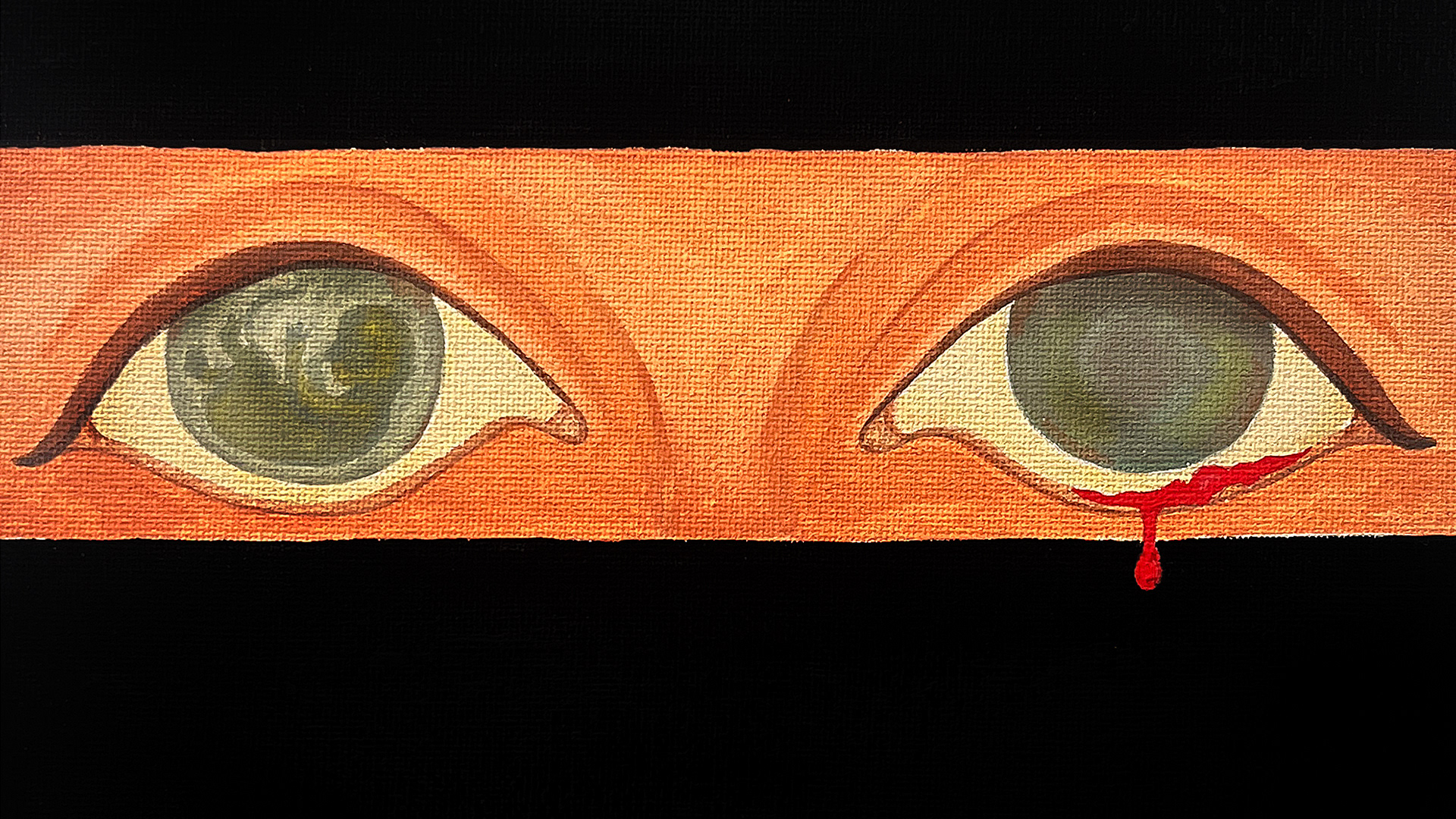
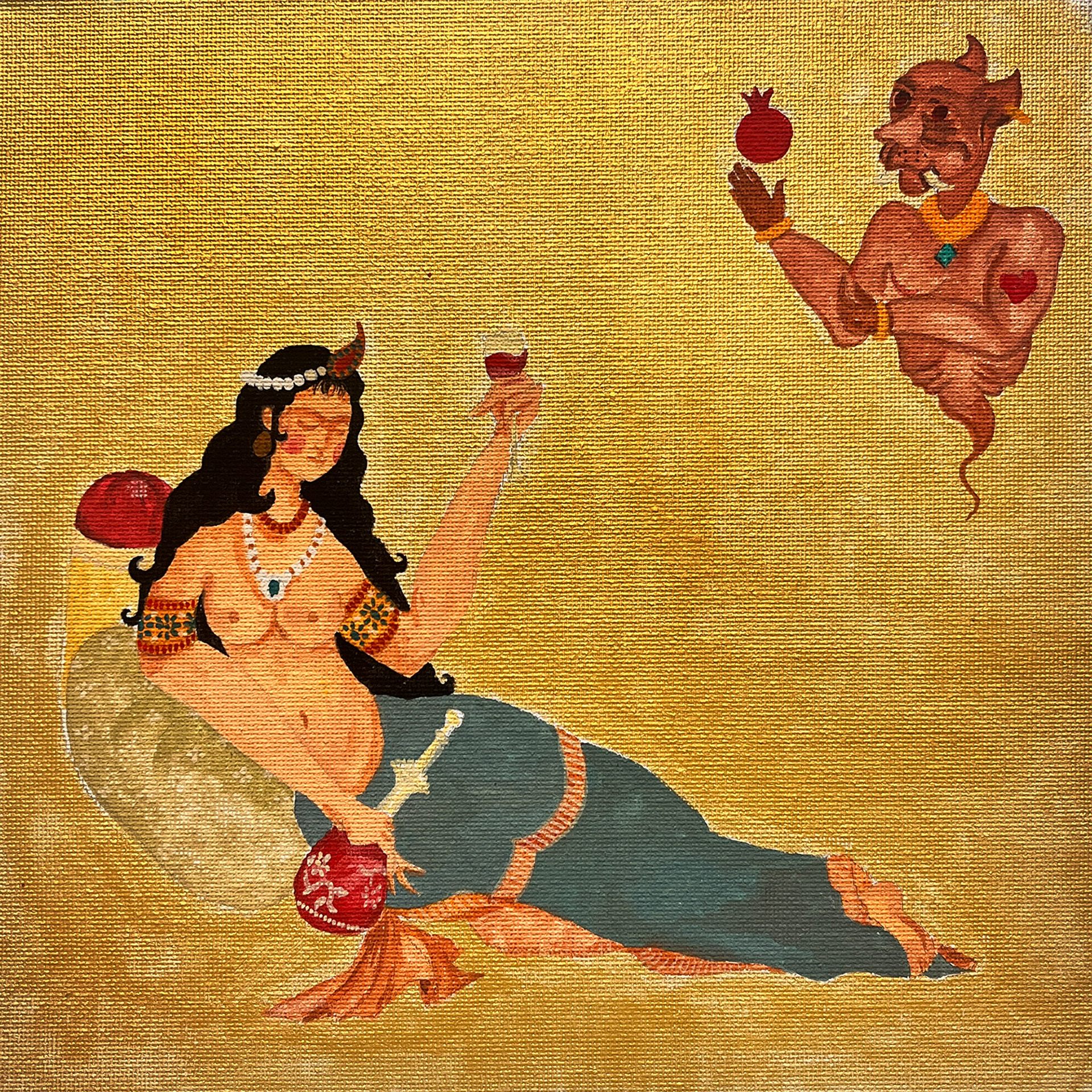
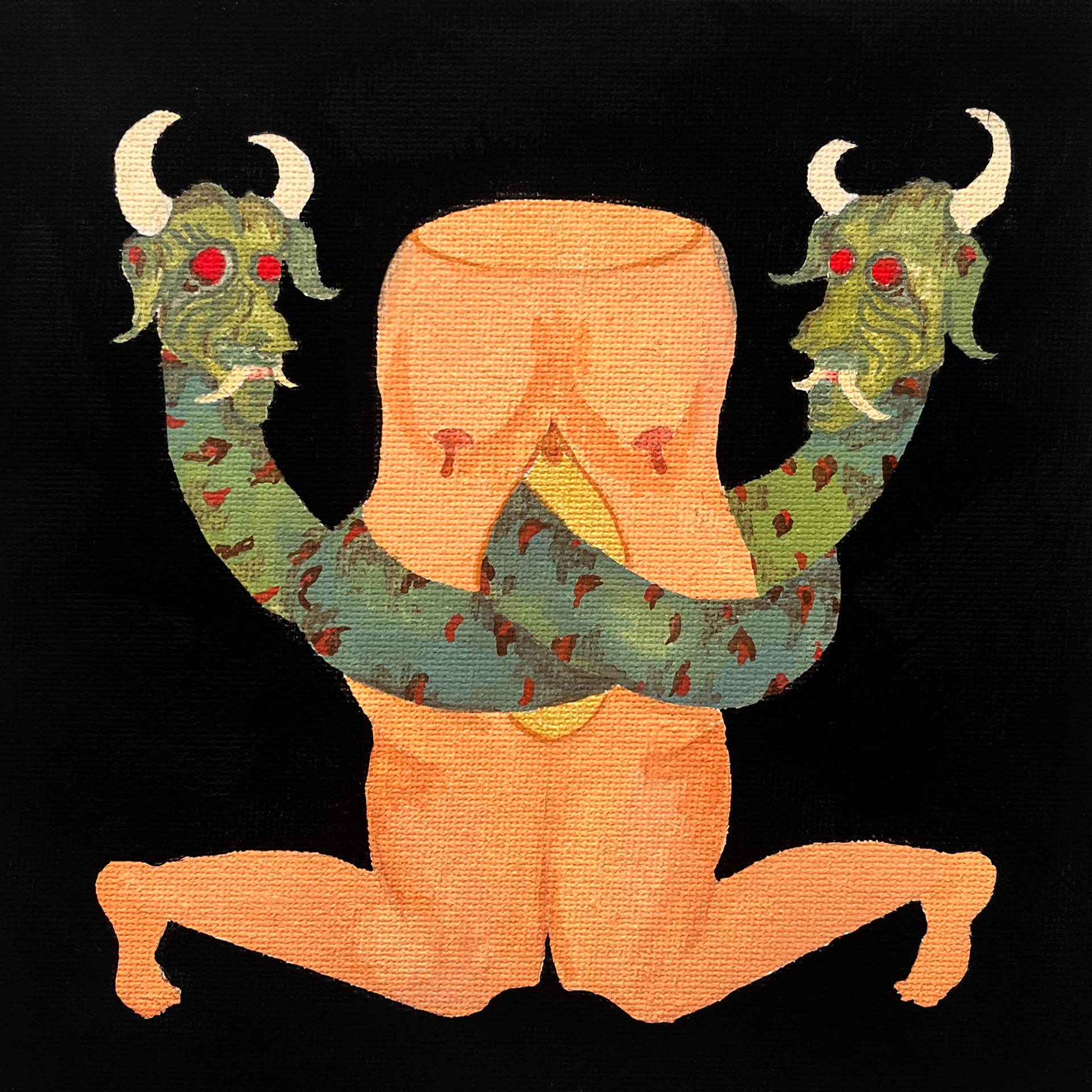
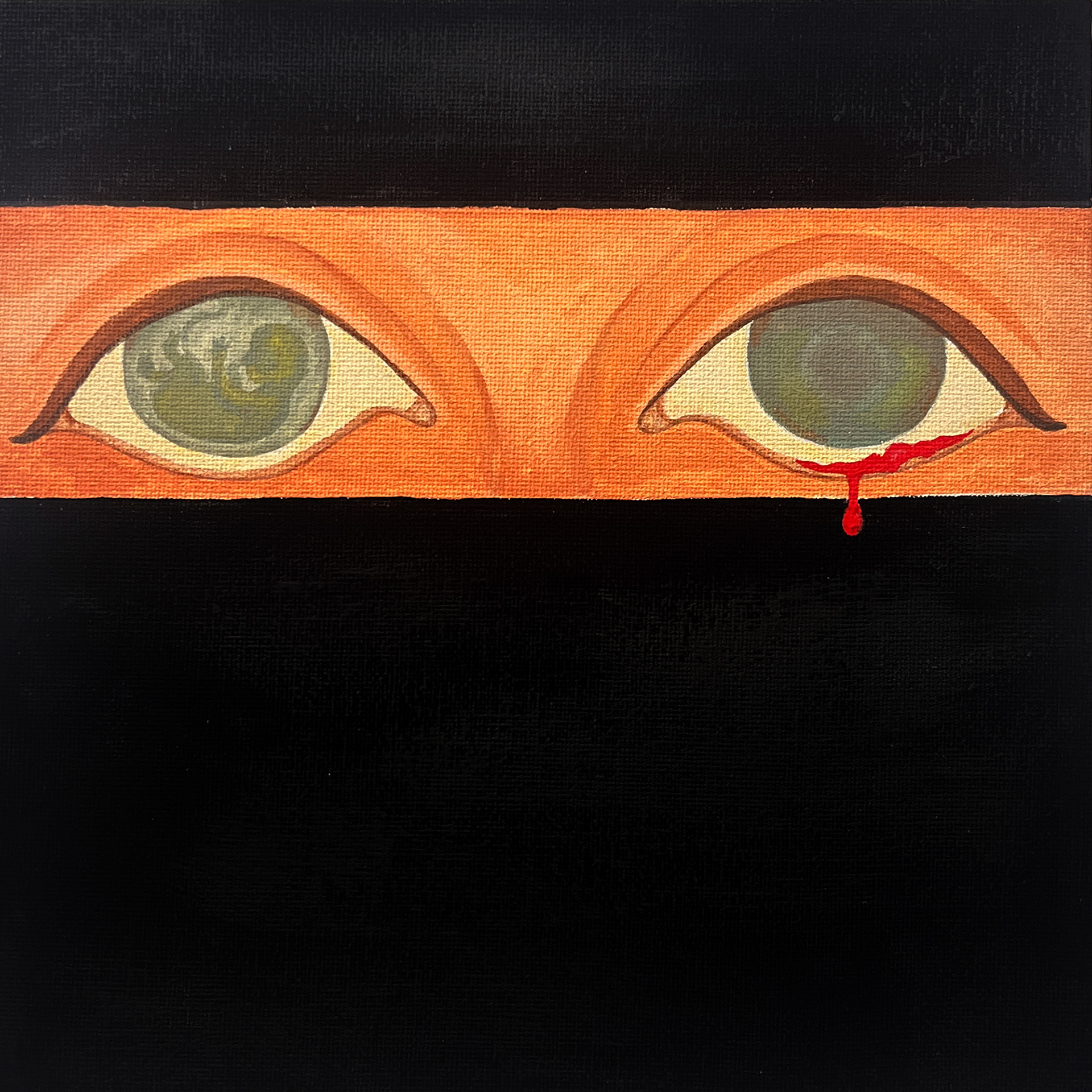
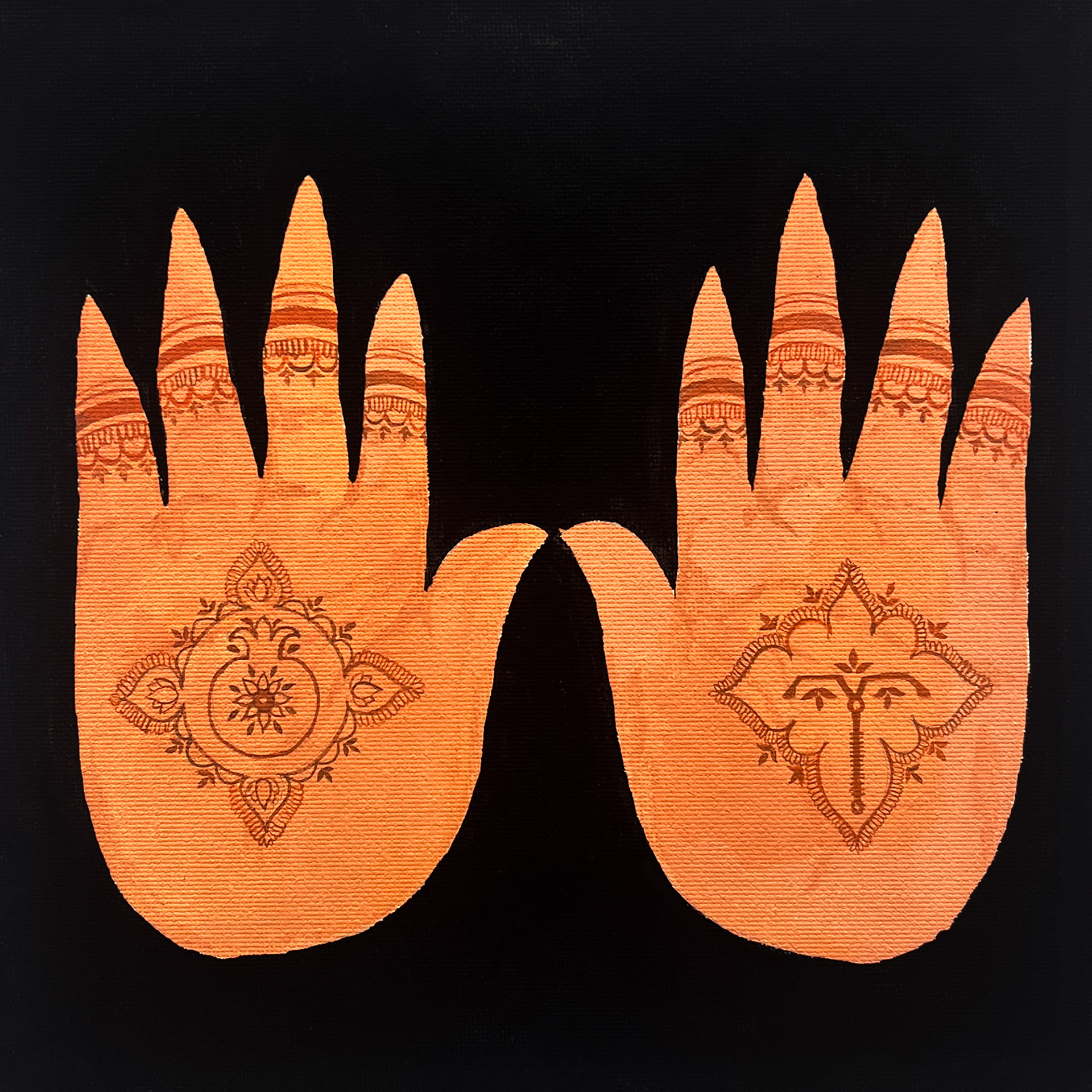
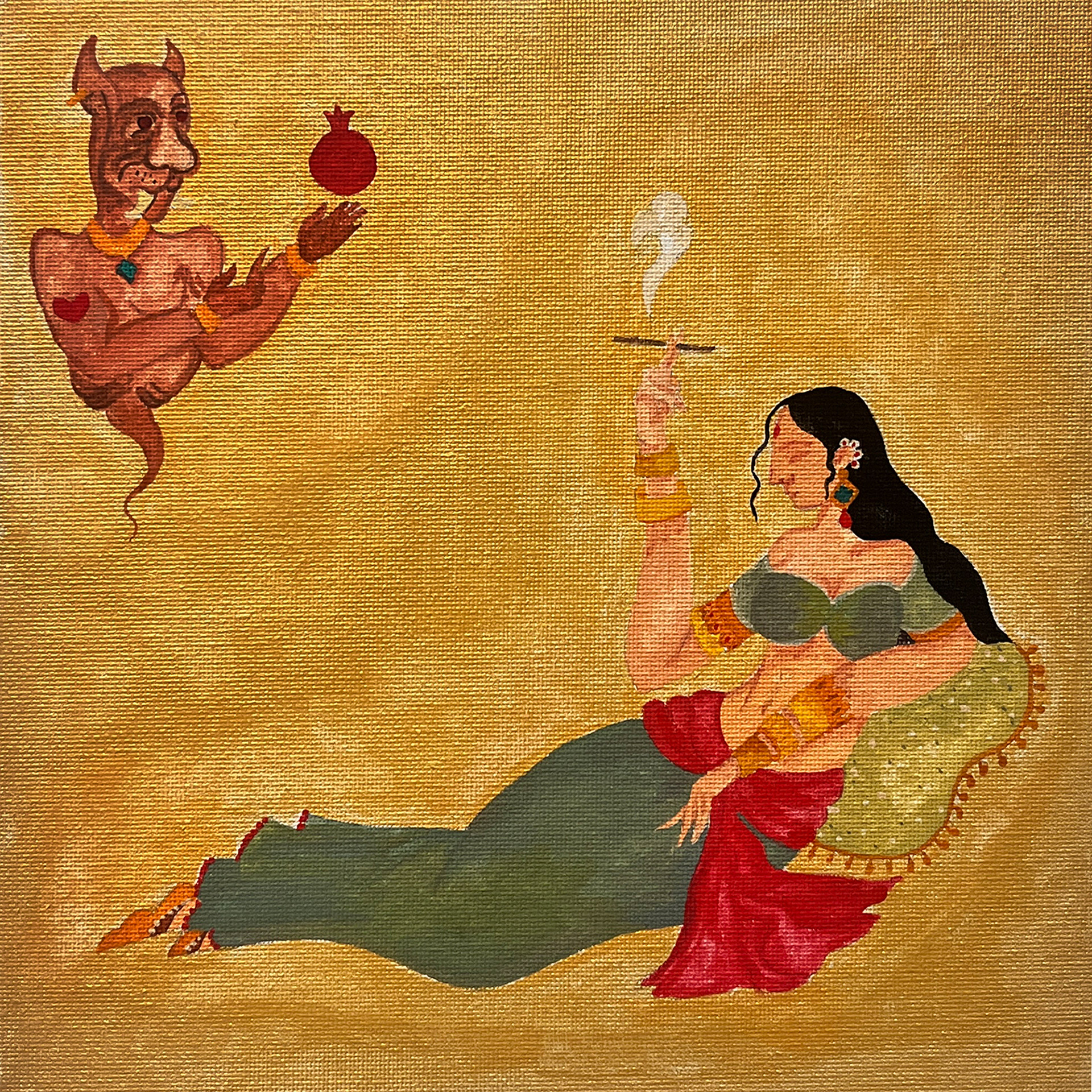
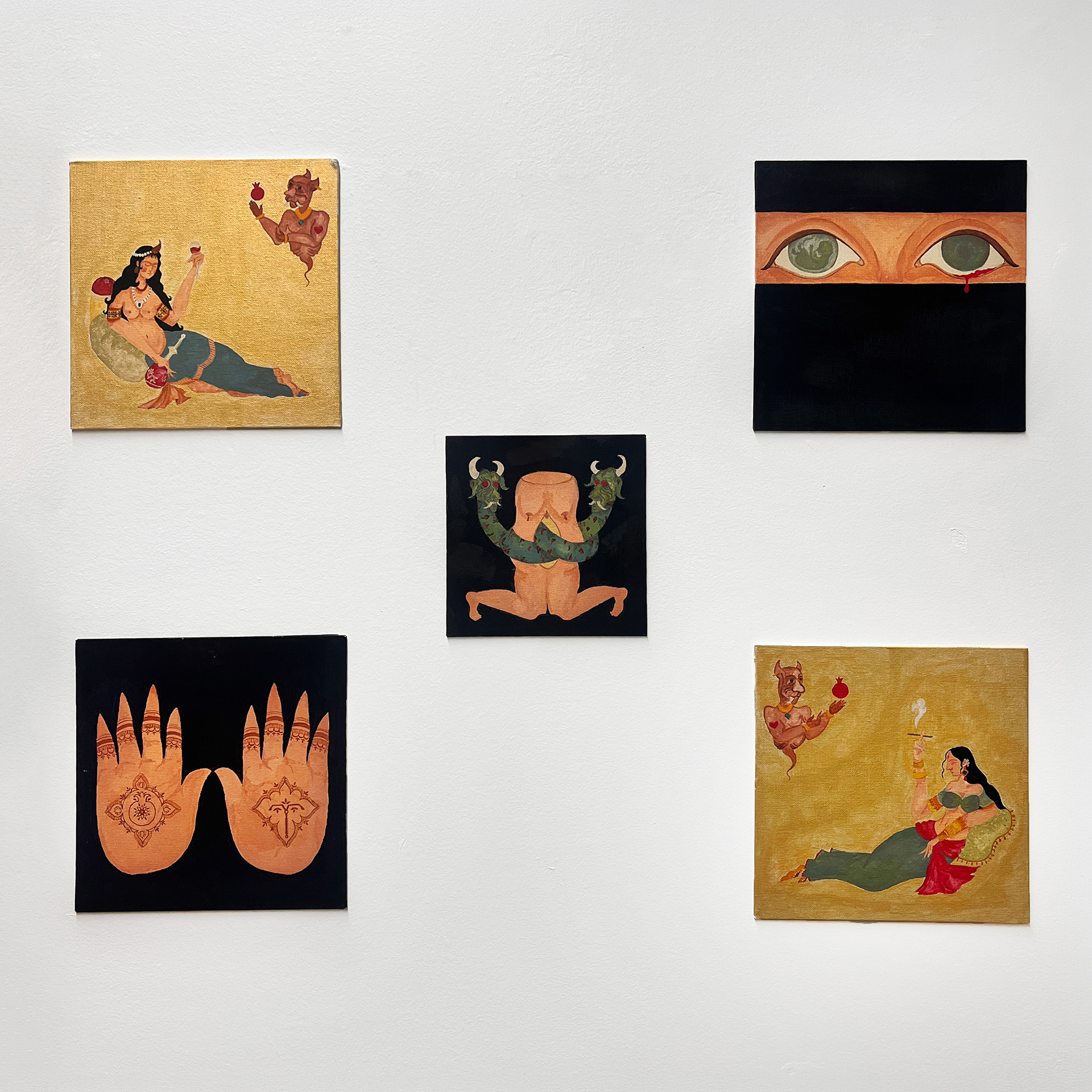
Arranged around a central axis like a traditional Persian chahar bagh (four-part garden), this five-piece artwork uses rich iconography to critique systemic oppression and celebrate female bodily autonomy under the Islamic regime. At the heart of the layout sits a central torso, reminiscent of Zahhak's mythical serpents, where two horned figures coil around a woman's body, evoking forced control over life and creation. Surrounding this core are four distinct panels that further unpack themes of grief, resistance, and bodily agency. In one portrait, a woman wearing a face veil (niqab) sheds a tear of blood while a tiny fetus appears in her other eye, capturing the silent anguish of restricted reproductive freedom and forced motherhood. In another, two outstretched palms feature henna motifs, one embedding a traditional pomegranate as a symbol of fertility, and the other subtly weaving an IUD into the design as a symbol of self-determination and protection. The remaining two gold-ground paintings depict women unbothered by a lurking div or jinn holding a pomegranate; instead of submitting to dictation or temptation, they visibly resist through small acts of autonomy, one sipping wine, the other smoking a cigarette, asserting their presence, pleasure, and independence despite oppressive forces.